
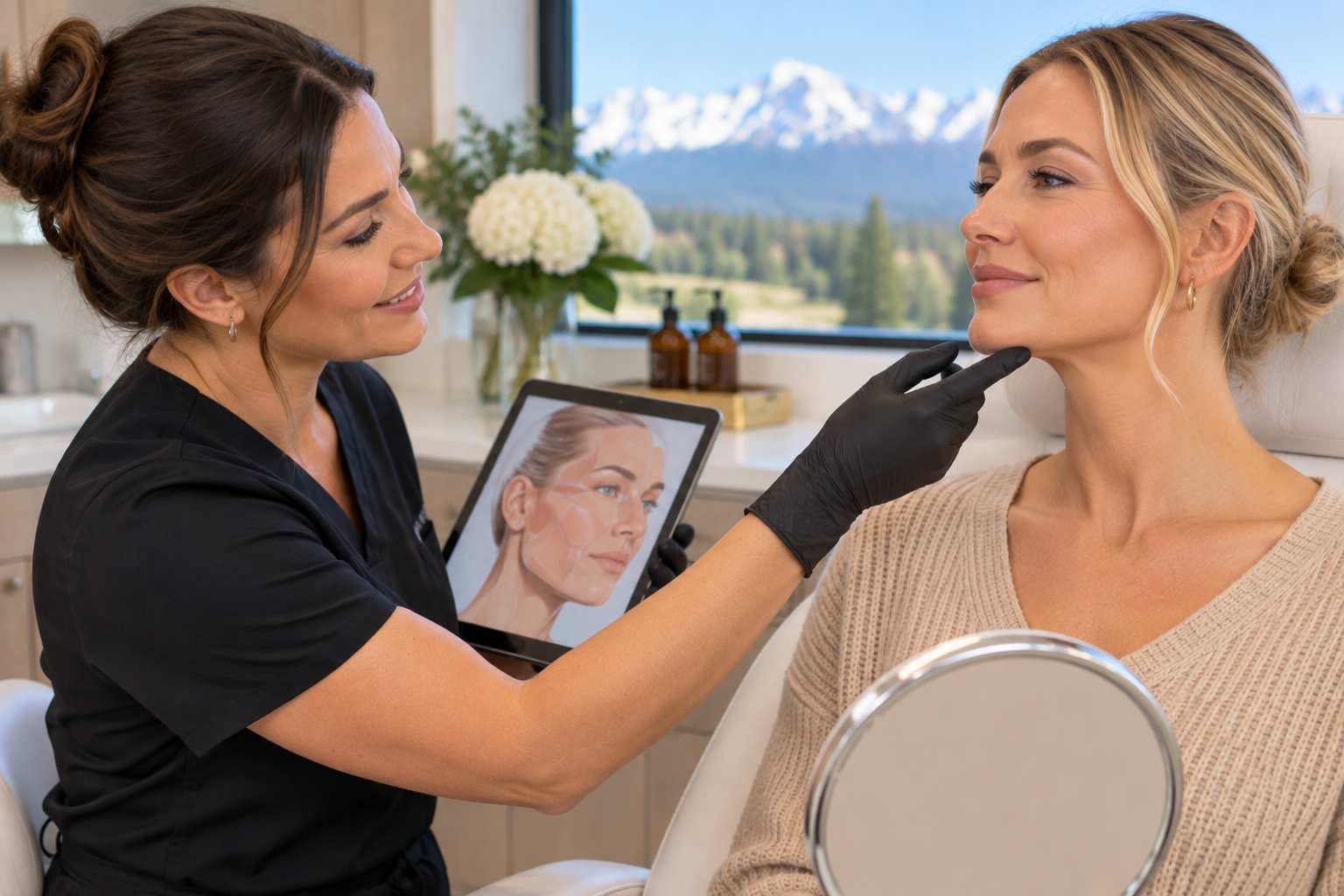
Are Dermal Fillers Safe? What Pinedale Patients Should Know Before Booking
You have been thinking about dermal fillers for a while. Maybe your cheeks look flatter than they used to, your jawline has softened, or the hollows under your eyes make you look tired. But before you book, you want to know one thing first: are fillers actually safe?
It is the right question to ask. Dermal fillers have an excellent track record when they are performed by a skilled injector, but they are still a medical treatment with real risks. At June Beauty Lab in Pinedale, safety and natural results come first. Here is a clear look at what fillers are made of, what can go wrong, how to reduce your risk, and what to look for in an injector.
What Are Dermal Fillers Made Of?
Most dermal fillers used today are made of hyaluronic acid (HA), a sugar molecule your body produces naturally to hold moisture and support tissue. HA fillers are formulated as gels of different thicknesses, so softer gels suit delicate areas and firmer gels provide structure. Many also contain lidocaine to improve comfort.
At June Beauty Lab, dermal filler treatments use HA gels. One of the biggest safety advantages of HA filler is that it can be dissolved with an enzyme called hyaluronidase if a result needs adjusting or a complication occurs.
How HA Fillers Differ From Other Injectables
Not every injectable that adds support is an HA filler. Biostimulators like Sculptra and Radiesse work by stimulating your own collagen over time. BioFiller is made from your own plasma, processed into a gel. These options have different benefits and different considerations, including that they are not dissolved the same way HA filler is. The Lab's article on dermal fillers vs. biostimulators explains the difference in more depth.
Are Dermal Fillers Safe?
Dermal fillers are generally safe when performed by a trained, experienced injector who understands facial anatomy. Most side effects are mild and temporary. Serious complications are rare, but they can happen, which is why your choice of provider matters more than almost anything else.
Common, Temporary Side Effects
- Swelling, especially in the lips and under-eye area
- Bruising at injection points
- Redness and tenderness
- Mild lumpiness that often settles as swelling fades
These usually resolve within a few days.
Rare but Serious Risks
The most serious risk is filler entering or compressing a blood vessel, which can reduce blood flow to the skin. In very rare cases, this can affect vision. That is why injectors avoid high-risk zones when safer alternatives exist and why experience with facial anatomy is essential.
Infection and delayed nodules are other uncommon complications. The American Society of Plastic Surgeons offers a helpful overview of dermal fillers, including risks and safety.
What Warning Signs Should You Watch for After Filler?
Contact your injector right away if you notice severe or worsening pain, skin that turns pale, white, blotchy, or dusky, or any change in your vision after treatment. These can be signs that blood flow is affected and need urgent attention. Normal swelling and bruising, by contrast, are mild and improve each day.
Keep your injector's contact information handy for the first few days after treatment. A provider who reviews these signs with you before you leave is a provider who takes safety seriously.
How Does Your Injector's Experience Affect Filler Safety?
Your injector's experience affects every part of filler safety, from choosing the right product and depth to knowing which areas carry higher risk. A careful injector also knows when filler is not the best tool for a concern.
That judgment is visible at June Beauty Lab. The Lab notes that the glabella, the area between the brows, is a delicate vascular zone and often prefers neurotoxins or threads there rather than filler. Injectables are led by founder and lead injector Megan Larsen, APRN, CRNA, a Certified Registered Nurse Anesthetist with over fifteen years of medical experience. Shelbi Ellis, RN, BSN, is a certified injector on the team. You can learn more on the About page.
Questions to Ask Before Your Appointment
- What are your credentials and training?
- Which product will you use, and why is it right for this area?
- Can this filler be dissolved if needed?
- What should I do if I notice a warning sign after treatment?
- Is filler the best option for my concern, or would something else work better?
Which Areas Can Dermal Fillers Treat?
At June Beauty Lab, HA fillers are used for the cheeks, temples, lips, chin and jawline, under-eye hollows, nasolabial folds, and marionette lines. Each area calls for a different product and technique, and some areas, like the under-eyes, require extra precision.
Most HA filler results last about six to eighteen months, depending on the product and the area. Some uses, such as under-eye filler, are product-specific or off-label, so your injector should explain what applies to your treatment.
What Should Men Know About Dermal Fillers?
Men often choose filler to strengthen the chin and jawline, restore volume in the cheeks, or soften tired-looking hollows. The goal is to preserve masculine angles and structure, not to create a softer or rounder face.
Because men tend to have thicker skin and different facial proportions, placement and product choice matter. A defined jawline, explored on the Lab's chin and jawline page, can make the whole face look sharper and more balanced, with or without a beard.
How Can Busy Professionals Plan Around Filler Recovery?
Most people return to work the same day after filler, but swelling or bruising can last a few days. Planning ahead keeps your schedule and your results on track.
Smart Scheduling
- Book at least two weeks before an important event, presentation, or photo
- Avoid alcohol for 24 hours afterward, and ask your injector which over-the-counter pain relievers are best to use
- Skip strenuous exercise for 24 to 48 hours
- Avoid saunas, steam rooms, and very hot showers for 48 hours
- Ice for ten minutes at a time and sleep with your head elevated for two nights
Always tell your injector about every medication and supplement you take, and never stop a prescribed medication without guidance from the provider who prescribed it.
What Does a Safety-First Filler Experience Look Like for High-End Clients?
For clients who want the most refined experience, the best results come from a consultation-led plan rather than a single syringe. A thorough assessment of facial structure, skin quality, and goals helps determine whether filler, biostimulators, or skin-quality treatments will give the most natural result.
At June Beauty Lab, that personalized approach is part of what the Lab calls "Ditching the Cookie-Cutter Standard." Comfort is part of the experience too, with numbing and a Comfort Menu that includes warm blankets, cool compresses, and distraction devices. Ongoing care can be organized through membership options.
Dermal Filler Questions People Ask
Are derma fillers the same as dermal fillers?
Yes. "Derma fillers" is simply another way people refer to dermal fillers, the injectable gels used to restore volume, smooth folds, and enhance facial contours.
Can dermal fillers be reversed?
Hyaluronic acid fillers can be dissolved with an enzyme called hyaluronidase. Biostimulators and plasma-based options do not dissolve the same way.
How long does swelling last after dermal fillers?
Swelling and bruising usually improve within a few days. Lips and under-eyes may swell more than other areas.
Who should not get dermal fillers?
People with an active skin infection in the treatment area, certain medical conditions, or unrealistic expectations may not be good candidates. Your injector will review your medical history before treatment to confirm filler is right for you.
Fill Smart, Glow Safely
Dermal fillers can restore lost volume and balance in a way that looks completely natural, and when they are performed by an experienced injector, they have a strong safety record. The key is knowing the real risks, recognizing warning signs, and trusting your face to a provider who puts anatomy and judgment first.
Ready to talk through your goals and safety questions in person? Book a consultation or contact June Beauty Lab at 128 W Pine Street in Pinedale. Patients from Big Piney, Marbleton, Boulder, and across Sublette County can learn more about sagging and volume loss and explore all services at June Beauty Lab.