
Why Wellness Treatments Hit Different at 7,000 Feet: A Pinedale Guide
Anyone who has spent a full winter in Sublette County knows the feeling. The days get short, the wind picks up, and by February even people who love the outdoors start to feel like they are running on empty. It is easy to write this off as just part of living somewhere beautiful and remote. But there is actual science behind why a wellness treatment plan matters more here than it might in a place at sea level with a milder winter, and understanding it can help you decide what is worth trying and what is just marketing noise.
This guide breaks down why Pinedale's elevation and latitude change the wellness equation, what treatments are actually backed by something more than a trend, and how to figure out what your body might be missing before you spend money guessing.
Why Altitude and Latitude Change the Rules
Pinedale sits above 7,000 feet, tucked against the Wind River Range, and that elevation does more than make the views spectacular. Thinner air, lower humidity, and long exposure to cold, dry wind all put more demand on the body than most people realize. On top of that, Wyoming's latitude means that from roughly November through February, the sun sits too low in the sky for your skin to make meaningful vitamin D, no matter how bright and clear those winter days look. It is a quirk of geography, not a personal failing, and it is one of the more overlooked reasons people in northern mountain towns report feeling sluggish, foggy, or low in the colder months.
Add in a lifestyle built around ranching, hunting, skiing, and long hours outdoors, and it is easy to see why a body here works harder than a body somewhere flat and sunny year round.
What a Real Wellness Treatment Plan Looks Like
A responsible wellness treatment approach starts with figuring out what is actually going on, not guessing. That usually means simple lab work to check things like vitamin D and B12 levels before jumping into any kind of booster or IV protocol. From there, June Beauty Lab's wellness services are built around addressing specific, identifiable gaps rather than offering a one size fits all fix.
IV Therapy for Hydration and Recovery
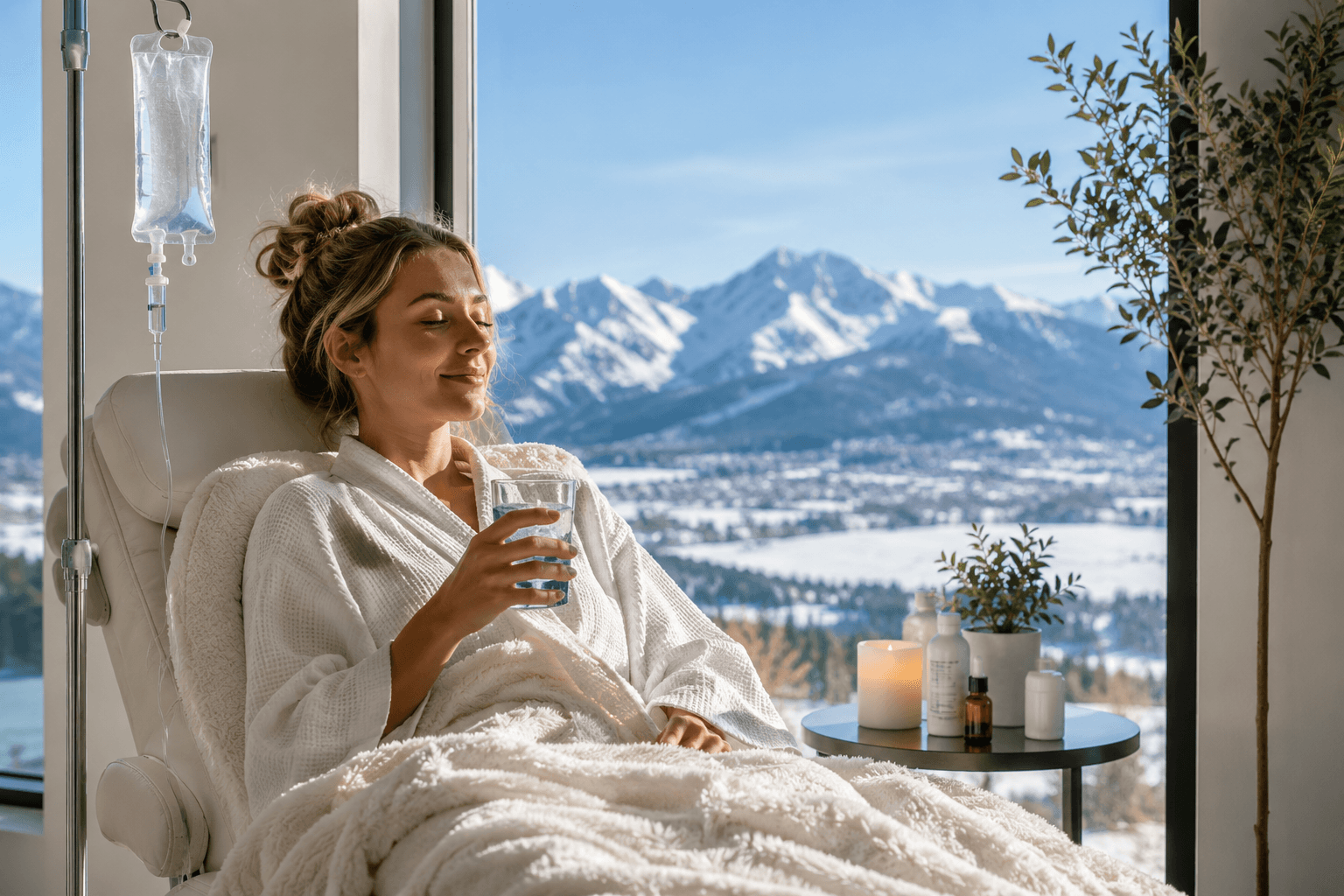
Dry mountain air pulls moisture out of the body faster than most people expect, and that dehydration can quietly contribute to headaches, fatigue, and slower recovery after a long day outside. IV therapy delivers fluids, electrolytes, and nutrients directly into the bloodstream, which can be a useful reset after altitude-related dehydration, travel, or an intense weekend in the backcountry.
Immune Support Through the Cold Season
Long winters and close indoor quarters make cold and flu season feel like it lasts twice as long here. The immune booster service is designed to support the body's natural defenses during the months when they are working overtime.
Energy and Metabolism Support
If you have noticed your energy dipping even though nothing about your schedule has changed, it might be worth looking at metabolic support. The metabolism booster option is one piece of a broader wellness conversation, alongside options like the NAD booster for those interested in cellular energy support.
Vitamin D and B12, the Two Most Relevant Boosters for Pinedale
Given the latitude issue described above, vitamin D deficiency is genuinely common in places like Wyoming during winter, and B12 deficiency can show up in anyone with absorption issues or a diet low in animal products. The vitamin D booster and energy vitamin B12 booster are two of the more evidence-supported options on the menu when a deficiency has actually been identified.
Wellness for a Rural Mountain Town
One thing that sets a place like Pinedale apart from a bigger city is distance. Jackson is over an hour away, and Rock Springs is farther still, which means a lot of people here have gotten used to putting off preventative care simply because it requires a half day of driving. Having a local option for lab-informed wellness treatment means you are not choosing between your health and your schedule. It also means the advice you get is coming from someone who actually understands what a Pinedale winter does to the body, rather than a generic wellness template built for a different climate entirely.
How to Choose What You Actually Need
The honest answer is that not every wellness trend applies to every person. The best starting point is a conversation about your symptoms, your lifestyle, and if appropriate, a simple blood test. From there, a treatment plan can be built around what your body is actually asking for, whether that is hydration, immune support, or correcting a specific vitamin gap. If you are unsure where to start, the team can walk you through the services page and help you figure out which option, if any, makes sense for your goals.
Updated this July with the current season in mind, since the shift from summer heat and sun exposure into the shorter days ahead is exactly when a lot of Pinedale residents start noticing the difference.
FAQs
What wellness treatment is best for altitude fatigue? There is no single answer for everyone, but hydration support through IV therapy and correcting a vitamin D or B12 deficiency, if one is present, are two of the most commonly relevant options for people feeling run down at elevation.
Do I need a wellness treatment if I already eat well and exercise? Not necessarily. Diet and exercise matter, but they do not fully offset issues like negligible winter vitamin D synthesis at this latitude. A quick lab check is the most reliable way to know if a booster would actually help.
How often should someone in Pinedale consider a vitamin D or B12 booster? This depends entirely on your individual levels and should be guided by testing rather than a fixed schedule. Your provider can recommend a cadence based on your results.
Is wellness treatment only for people who feel sick? No. Many people pursue wellness treatment for prevention and maintenance, especially heading into a long winter, rather than waiting until they feel run down.
The Altitude Adjustment Every Pinedale Local Should Make
Living at 7,000 feet is part of what makes this place worth calling home, but it does ask more of your body than sea level ever would. A little bit of informed wellness treatment, built around what your labs and your lifestyle actually say, can be the difference between white-knuckling through February and genuinely feeling like yourself all winter long.