
Why Active Pinedale Locals Are Turning to PRP Therapy for Recovery
There is no shortage of ways to put wear and tear on your body in Sublette County. Between backcountry hikes into the Bridger Wilderness, long days in the saddle, elk season, and winters spent on skis or a snowmobile, an active Pinedale lifestyle tends to catch up with joints, tendons, and even hair over time. That is a big part of why PRP therapy has become a more common conversation at med spas and wellness clinics in mountain towns like this one.
This article covers what PRP actually is, what it is realistically used for, and how it applies whether your main concern is recovery, hair thinning, or skin texture.
What PRP Actually Is
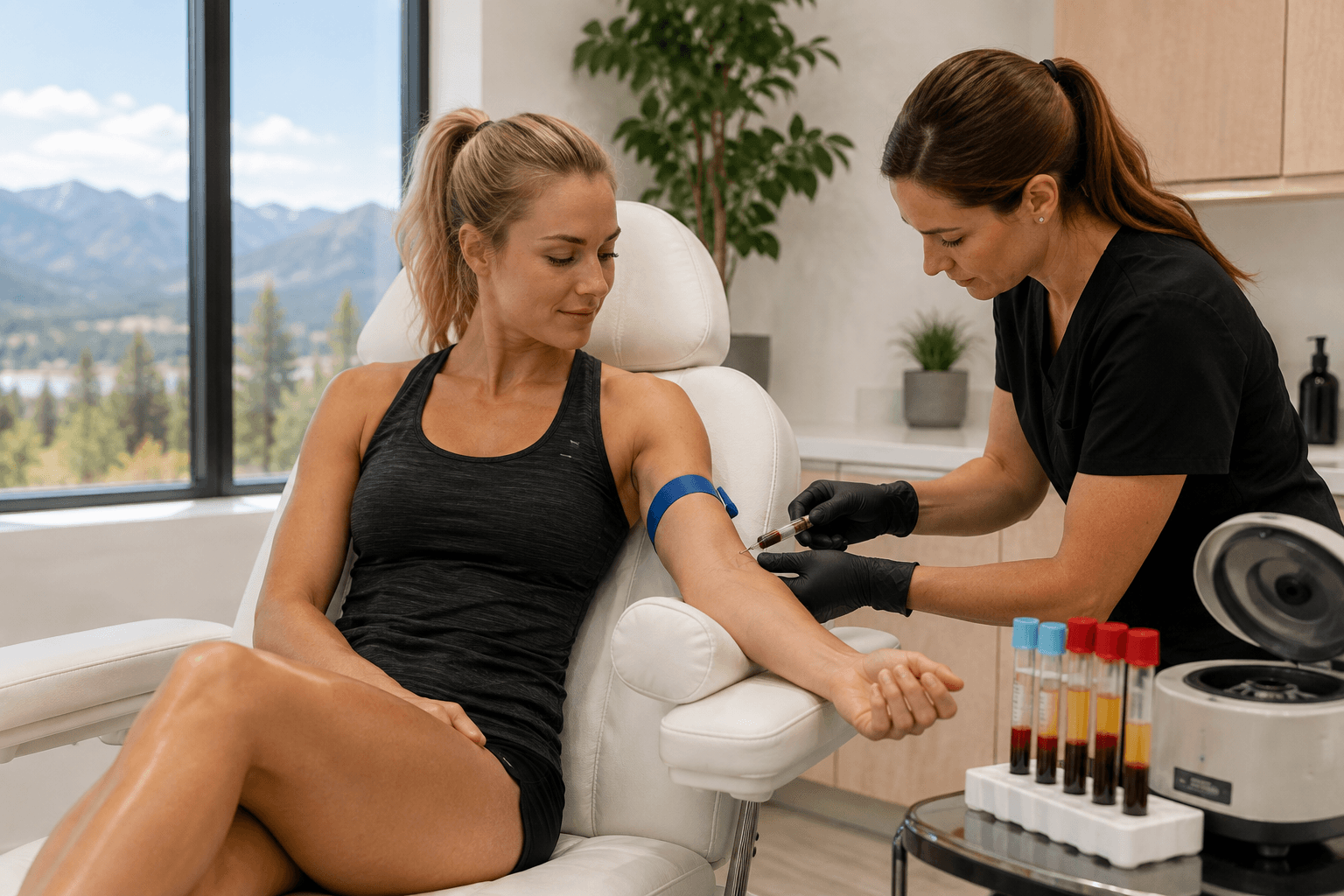
PRP stands for platelet-rich plasma, which is derived from your own blood. A small sample is drawn and spun in a centrifuge to concentrate the platelets, which contain growth factors involved in the body's natural healing process. That concentrated plasma is then reintroduced into a targeted area, whether that is the scalp, skin, or a joint, to encourage the body's own repair mechanisms to get to work.
Because it uses your own blood rather than a synthetic product, PRP has become a popular option for people looking for a treatment that works with the body's existing biology rather than introducing something foreign to it.
Where PRP Therapy Fits for an Active Lifestyle
Recovery Support After Physical Strain
Years of hiking steep terrain, working cattle, or pulling a sled behind a snowmobile add up. While PRP is best known in the aesthetics world, its origins are rooted in supporting the body's healing response, which is part of why so many active people in this region are curious about it as a recovery-focused option worth discussing with a provider.
Hair Thinning and Restoration
One of the more well-established uses for PRP is hair restoration. For anyone noticing thinning at the crown or a widening part, PRP and PRF treatments work by stimulating hair follicles with concentrated growth factors, often alongside options like DE RIVE hair restoration for a more complete approach. The hair thinning concern page has more detail on how these treatments are typically combined.
Skin Texture, Scarring, and Overall Rejuvenation
PRP is also frequently combined with microneedling for a treatment that addresses skin texture, fine lines, and acne scarring at the same time. Microneedling with PRP creates controlled micro-injuries that trigger collagen production, while the added PRP amplifies the healing and regeneration process. This combination has become popular for people dealing with scars from acne or surgery, as well as those simply looking for an overall refresh in skin quality and tone.
Why Safety and Sourcing Matter With PRP
Because PRP involves drawing and reintroducing your own blood, it is important that it be done in a licensed, medically supervised setting with proper sterile technique. This is not a treatment to seek out from an unlicensed provider or a pop-up service, since the process involves needles and bloodwork that require the same standards as any other medical procedure. Choosing a provider who follows strict clinical protocols is the single most important decision in the entire process.
Setting Realistic Expectations
PRP is not an instant fix. Hair restoration results typically build gradually over several months and multiple sessions, and skin rejuvenation results follow a similar timeline as collagen production ramps up. For people coming from a physically demanding lifestyle who are used to seeing quick results from hard work, it can take some patience to let the biology do its job. That said, for the right candidate, the gradual, natural-looking improvement is often exactly what makes PRP appealing compared to more dramatic or synthetic alternatives.
Is PRP Therapy Right for You
The best way to know if PRP fits your goals is a consultation where your specific concern, whether that is thinning hair, acne scarring, or overall skin quality, gets matched to the right protocol. The services page has a full breakdown of what is offered, and the team can walk you through what a realistic timeline and outcome would look like for your situation.
Updated this July, as many Pinedale residents start planning ahead for hunting season and fall recovery needs, along with wanting hair and skin improvements settled before the holidays.
FAQs
Does PRP therapy hurt? Most people describe mild discomfort similar to microneedling or a typical injection, and topical numbing is often used to keep the process comfortable.
How many PRP sessions are usually needed? This varies by goal, but hair restoration and skin rejuvenation protocols typically involve a series of sessions spaced several weeks apart, with results building gradually over time.
Is PRP therapy safe since it uses my own blood? When performed by a licensed provider using proper sterile technique, PRP is considered a safe procedure since it uses your own biological material rather than a foreign substance.
Can PRP therapy help with both hair and skin concerns? Yes. PRP is commonly used for hair restoration and, when combined with microneedling, for skin texture, tone, and scarring, though they are typically addressed as separate protocols tailored to each concern.
Witty Conclusion: Let Your Own Biology Do the Heavy Lifting
Pinedale life already asks a lot of your body between the trails, the cold, and the long work days. PRP therapy is one of the few treatments that responds by putting your own healing systems back to work, rather than asking you to recover from something foreign. For hair, skin, or general renewal, it is worth a conversation before your next big season outdoors.