
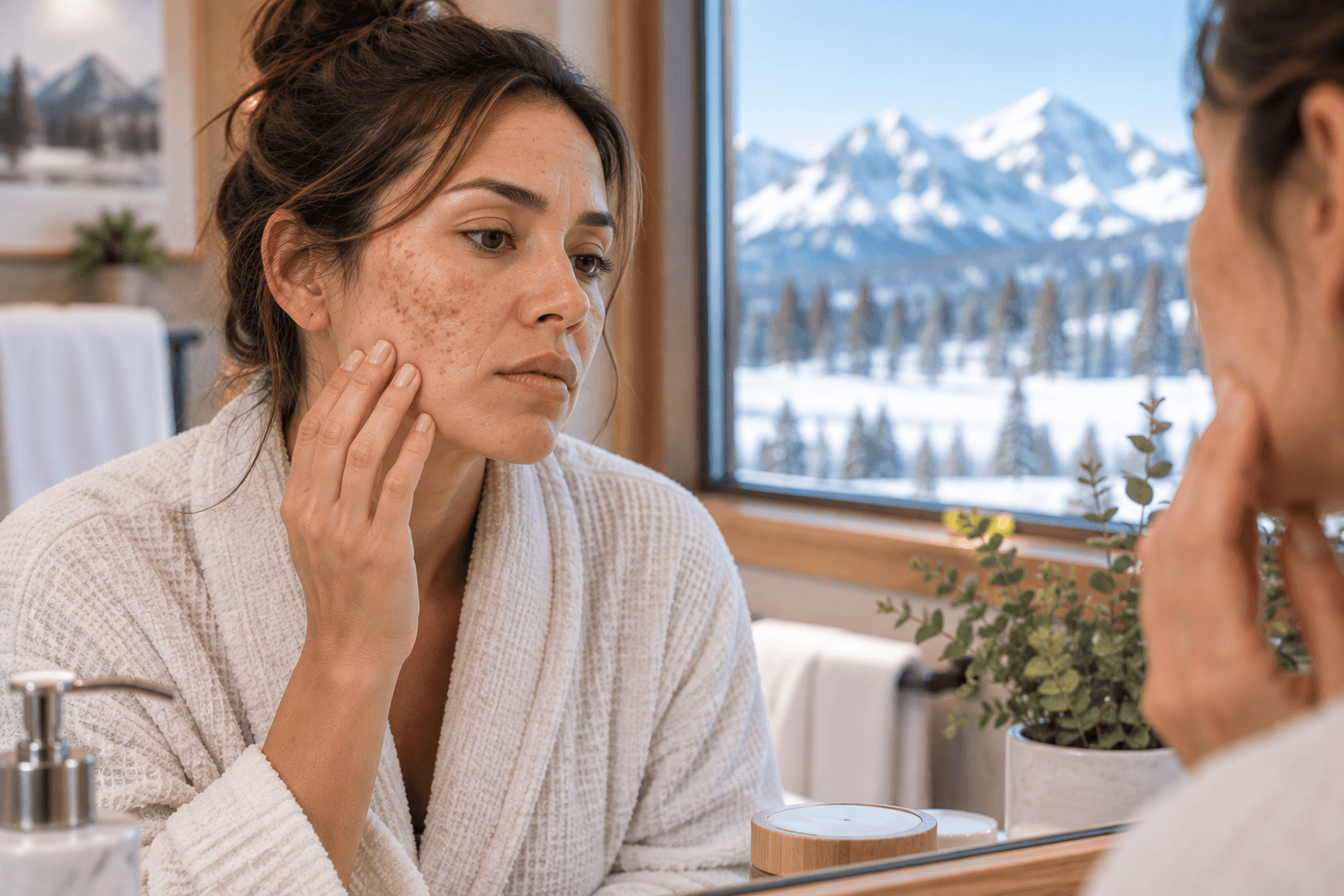
What Causes Dark Spots on Skin in Pinedale, Wyoming?
If you have started noticing small brown or tan patches on your cheeks, forehead, or the backs of your hands that were not there a few years ago, you are not imagining it and you are definitely not alone. Dark spots are one of the most common skin concerns people bring up in consultations, and living at Pinedale's elevation actually makes them more likely to appear earlier than they might somewhere at sea level. This article is updated this August 2026 to walk through exactly why these spots form and what can genuinely fade them.
What Actually Causes Dark Spots?
Dark spots, sometimes called hyperpigmentation, happen when the skin produces excess melanin in a concentrated area. Melanin is the pigment responsible for skin color, and it is produced by cells called melanocytes as a protective response to things like UV exposure, inflammation, or hormonal changes. When melanocytes overproduce pigment in one specific spot rather than evenly across the skin, the result is a visibly darker patch.
Why does sun exposure cause dark spots?
UV radiation triggers melanocytes to produce more melanin as a defense mechanism against further damage. Over years of cumulative sun exposure, this can result in flat, brown spots commonly called sunspots or solar lentigines, which typically show up on areas that get the most consistent sun, like the face, chest, shoulders, and the backs of the hands.
Does altitude make dark spots worse?
Yes, this is an important factor for anyone living in a high altitude area like Pinedale. UV intensity increases roughly four percent for every thousand feet of elevation gain, and Pinedale sits well over seven thousand feet. That means UV exposure here is meaningfully stronger than it would be at sea level, even on a mild or overcast day, which is part of why so many longtime residents notice pigmentation forming earlier than they expected.
What other things cause dark spots?
Hormonal changes, particularly from pregnancy or birth control, can trigger a type of pigmentation called melasma, which tends to appear in larger, more symmetrical patches, often across the cheeks or upper lip. Dark spots can also form after inflammation, such as after a breakout or an injury to the skin, a pattern called post-inflammatory hyperpigmentation. You can read more about how sun exposure and pigmentation connect on our page about sun damage and pigmentation.
Can Dark Spots Be Prevented?
Daily, consistent sun protection is the single most effective way to prevent new dark spots from forming and to keep existing ones from getting darker. This matters even more at elevation, where UV exposure is stronger than most people account for. Wide brimmed hats, sunglasses, and reapplying sunscreen throughout the day, especially during outdoor activities common around Pinedale like hiking or time on the water, all make a meaningful difference over time.
How Do You Know If a Dark Spot Needs Medical Attention?
Most dark spots are harmless and purely cosmetic, but it is worth knowing the difference between typical sun damage and something that should be evaluated by a physician. Spots that are asymmetrical, have irregular borders, contain multiple colors, are larger than a pencil eraser, or that change in size, shape, or color over time should be checked by a dermatologist to rule out anything more serious. Cosmetic pigmentation treatments are intended for spots that have already been identified as benign.
What Treatments Actually Fade Dark Spots?
Once a spot has been confirmed as ordinary sun damage or other benign pigmentation, our med spa in Pinedale, Wyoming offers a few different approaches depending on the type and depth of the pigment.
Does IPL help with dark spots?
IPL, or intense pulsed light, is one of the most commonly used treatments for sun-related pigmentation. It works by delivering light energy that is absorbed by excess pigment in the skin, causing it to break apart and gradually rise to the surface where it flakes away over the following days and weeks. IPL is generally most effective on flat, brown sunspots rather than deeper or hormonal pigmentation.
Can laser skin resurfacing treat dark spots?
Laser skin resurfacing works at a slightly different level, removing damaged surface skin cells and encouraging fresh, more evenly toned skin to take their place. This can be a good option for pigmentation that is combined with textural concerns like roughness or fine lines.
What do chemical peels do for pigmentation?
Chemical peels use targeted acids to exfoliate the outer layers of skin, which helps fade surface level pigmentation and even out overall skin tone. Peels are often used as part of an ongoing maintenance plan alongside other treatments.
Who Is a Good Candidate for Dark Spot Treatment?
People with flat, sun-induced pigmentation that has already been evaluated and confirmed as benign tend to see the best results from treatments like IPL and laser resurfacing. Melasma, the hormonal type of pigmentation, can be more complex to treat and often requires a more conservative, layered approach since aggressive heat-based treatments can sometimes worsen it. A consultation is the best way to determine which category your pigmentation falls into and which treatment path makes sense.
How Long Does It Take to See Results?
Most pigment-targeting treatments show visible improvement within one to three weeks as the treated pigment rises to the surface and sheds. Full results, especially for more established or widespread pigmentation, typically build over a series of sessions spaced several weeks apart, alongside consistent daily sunscreen use to protect the progress.
Frequently Asked Questions
Do dark spots go away on their own? Some post-inflammatory marks fade naturally over several months, but sun-induced dark spots typically do not resolve on their own and tend to persist or darken further without sun protection or treatment.
Is IPL safe for all skin tones? IPL works best on lighter to medium skin tones with good contrast between the pigment and surrounding skin. A consultation will help determine whether IPL or an alternative treatment is the safer, more effective choice for your specific skin tone.
Will dark spots come back after treatment? Treated spots themselves typically do not return, but new spots can form with continued sun exposure, which is why daily sunscreen is considered part of the treatment plan rather than optional.
Can I treat dark spots at home? Over the counter brightening ingredients can offer mild improvement for very superficial discoloration, but established sunspots generally respond far better to in-office treatments that target pigment more directly.
Spot On: Getting Your Even Tone Back
Dark spots are one of those concerns that tend to sneak up gradually and then suddenly feel impossible to ignore in the mirror. Living at elevation in Pinedale means UV exposure plays an outsized role, but it also means there is a clear, actionable reason behind what you are seeing, and a clear path to addressing it. Our team is happy to take a look at your skin and map out which treatment will get you back to an even, confident tone.