
Why Is My Skin Sagging, and What Can Actually Firm It Back Up?
Updated September 2026
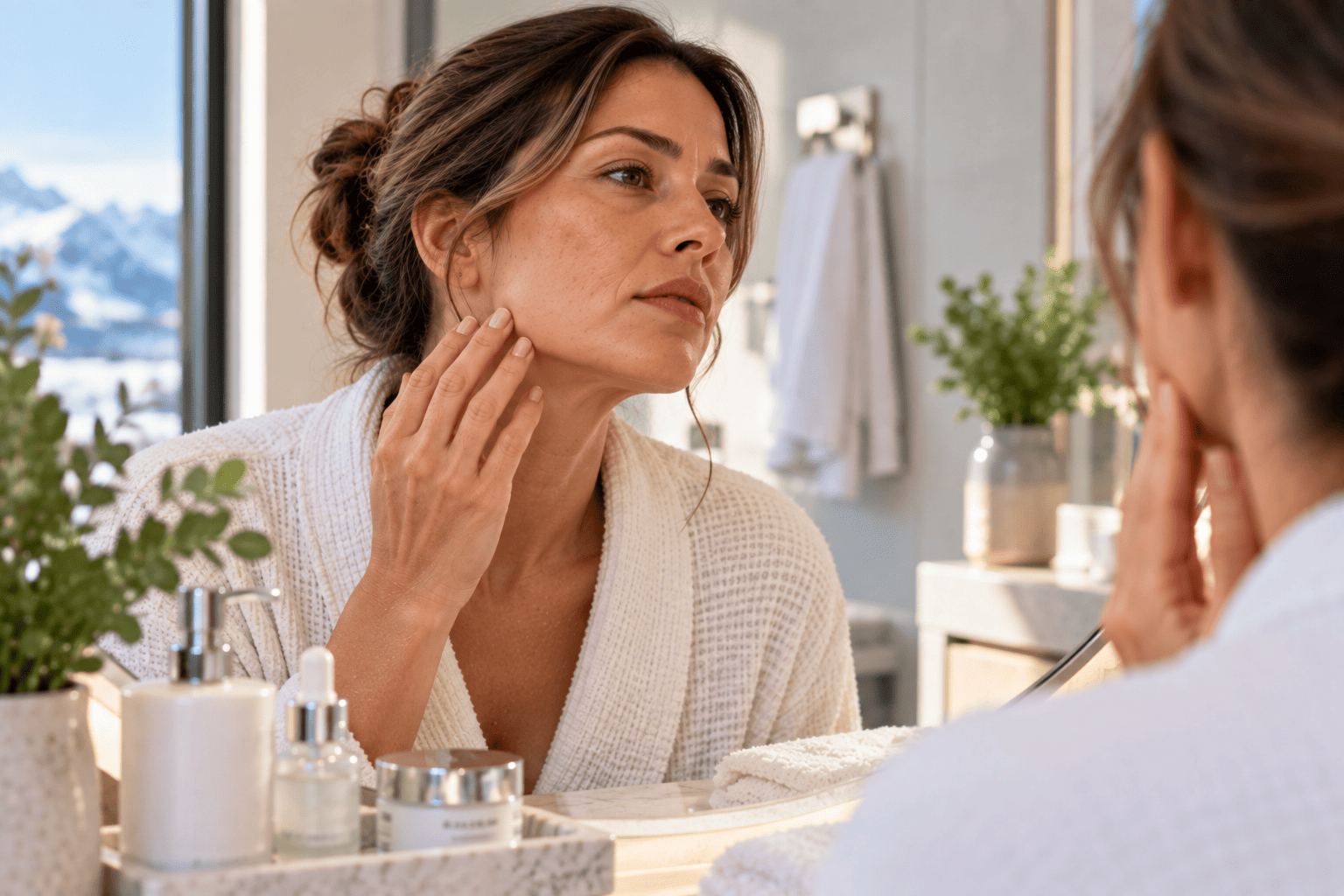
It usually starts with a photo. Maybe it's a candid shot from a hike near Fremont Lake or a video call where the camera angle is less than kind. Suddenly you notice your jawline looks softer, your eyelids feel heavier, or your neck has a crepey texture that wasn't there a few years ago.
Sagging skin is one of the most common concerns people bring to an aesthetic consultation, and one of the most misunderstood. It isn't only about age, and it isn't something you simply have to accept. Understanding why skin loosens is the first step toward choosing a treatment that actually works for your face, your timeline, and your life here in Pinedale.
What Causes Sagging Skin?
Sagging skin happens when the proteins that keep skin firm, mainly collagen and elastin, break down faster than your body can replace them. At the same time, facial fat pads shrink and shift, and bone structure gradually changes, so the skin has less support underneath.
Think of it like a tent. Collagen and elastin are the fabric, and fat and bone are the poles. When the fabric thins and the poles shorten, the whole structure droops.
How Much Collagen Do We Lose as We Age?
Collagen production begins to slow in our mid-twenties, with estimates often placing the decline at around one percent per year. For women, the drop becomes more dramatic around menopause, when research suggests up to 30 percent of skin collagen can be lost in the first five years as estrogen falls.
Does Sun Exposure Make Skin Sag Faster?
Yes, and dramatically so. Ultraviolet light breaks down collagen and damages elastin fibers, a process called photoaging. The American Academy of Dermatology notes that sun exposure is responsible for much of the visible aging people see on their skin.
For anyone in Sublette County, this is worth paying attention to. UV intensity increases about 10 percent with every 1,000 meters of elevation, according to the World Health Organization. At over 7,000 feet, summer ranch work, fishing, hunting season, and winter sports all add up to heavy cumulative exposure. Sun damage and pigmentation often show up alongside laxity for this reason.
What Other Factors Speed Up Skin Laxity?
Several lifestyle and health factors play a role:
- Significant or rapid weight loss, which can leave skin with less support
- Smoking, which constricts blood flow and damages collagen
- Chronic stress and poor sleep, which affect skin repair
- Dehydration, especially common in dry mountain climates
- Genetics, which influence skin thickness and how early laxity appears
What Are the Early Signs of Sagging Skin?
Early signs include a less defined jawline, softening along the cheeks, fine crepey lines on the neck or chest, and a slightly heavier brow or upper eyelid. Many people notice these changes first in photos or under overhead lighting.
Catching laxity early matters because mild sagging responds far better to nonsurgical treatment than advanced sagging does. It's much easier to maintain collagen than to rebuild it from very little.
Where Does Sagging Usually Show Up First?
Common trouble spots include:
- The chin and jawline, where jowls begin to form
- The neck and décolletage, prone to crepiness and horizontal lines
- The cheeks, which flatten as volume is lost
- The eye area, including hooding and under-eye hollowing
Can You Prevent Sagging Skin?
You can't stop the natural aging process, but you can slow it considerably. Daily broad-spectrum sunscreen, consistent hydration, a retinoid-based routine, and professional collagen-stimulating treatments all help preserve firmness over time.
Quality at-home products support this work between visits. Options in the June Beauty Lab shop, such as the NaturalU FirmU Neck Cream and NaturalU SheerU SPF 50, are designed to protect and support skin daily.
How Does Sagging Skin Look Different Across Life Stages?
Laxity doesn't look the same for everyone, and neither does the ideal treatment approach.
Women in Their 40s and 50s
Hormonal shifts during perimenopause and menopause often accelerate sagging along the jaw, neck, and cheeks. Many women notice their skin feels thinner and drier at the same time. A layered approach that rebuilds collagen while restoring lost support tends to give the most natural results.
Men Who Want a Sharper Jawline
Men generally have thicker skin and tend to show laxity a bit later, but when it appears, it often concentrates at the jawline and under the chin. Most men want tightening that looks like good genes and a good night's sleep, not like a procedure.
Busy Professionals With No Time for Downtime
If your calendar is packed with meetings, travel, or long days on a job site, recovery time is a deal-breaker. Fortunately, several of the most effective skin tightening options require little to no downtime at all.
What Are the Best Nonsurgical Treatments for Sagging Skin?
The most effective nonsurgical options stimulate your body to build new collagen, tighten deeper tissue layers, or restore lost structural support. The right choice depends on where the sagging is and how advanced it has become. You can explore all options on the sagging and loss of volume concern page.
Ultherapy for Deep Lifting
Ultherapy uses micro-focused ultrasound to target the SMAS layer, the same deep tissue addressed during a surgical facelift. It is FDA-cleared to lift the brow, neck, and under the chin, and it also improves lines on the décolletage. Most people need just one session, there's no downtime, and results develop over two to three months, lasting around one to two years.
Radiofrequency Microneedling for Tightening and Texture
Radiofrequency microneedling delivers heat energy through ultra-fine needles into the dermis, triggering immediate collagen contraction and long-term remodeling. It's especially helpful for early jowls and crepey neck or chest skin. Expect a series of three to four sessions spaced a month apart, with 24 to 48 hours of mild redness.
Biostimulators to Rebuild Support
Biostimulators like Radiesse and Sculptra stimulate fibroblasts to produce fresh collagen and elastin. Radiesse offers immediate structural support, while Sculptra builds gradually. Results appear over three to six months and can last up to two years.
PDO Smooth Threads for Crepey Skin
PDO Smooth Threads create a supportive mesh beneath the skin that triggers collagen, elastin, and hyaluronic acid production. They work best for fine lines and crepey texture rather than significant sagging, making them a great complement to deeper lifting treatments.
When Should You Seek Professional Treatment for Sagging Skin?
It's a good time to book a consultation when at-home products no longer make a visible difference, when your jawline or neck definition has noticeably changed, or when you want to prevent mild laxity from progressing. Earlier treatment usually means fewer sessions and more natural results.
An experienced provider will assess skin thickness, degree of laxity, and volume loss before recommending a plan. At June Beauty Lab, that assessment is led by licensed medical injectors who favor natural, never-overdone results.
Frequently Asked Questions
Can sagging skin be reversed without surgery?
Mild to moderate sagging skin can be significantly improved without surgery using collagen-stimulating treatments like Ultherapy, RF microneedling, and biostimulators. Advanced laxity may need a surgical consultation for dramatic change.
At what age does skin start to sag?
Many people notice early laxity in their mid-thirties to early forties, although genetics, sun exposure, and lifestyle can shift that timeline earlier or later.
Does weight loss cause loose skin on the face?
It can. Rapid or significant weight loss reduces facial fat that supports the skin, which may make the face look deflated or looser. Collagen-building treatments and volume restoration can help.
How long do skin tightening results last?
It varies by treatment. Ultherapy results often last one to two years, and biostimulators can last up to two years. Maintenance sessions help extend results.
Is skin tightening painful?
Most treatments involve mild discomfort that's well tolerated. Numbing and comfort options are available to keep the experience relaxed.
Gravity Called. You Don't Have to Answer.
Sagging skin is a natural part of life, but it doesn't have to be the final word on how you look or feel. With the right combination of prevention and professional treatment, you can restore firmness in a way that still looks completely like you.
If you're noticing changes along your jawline, neck, or cheeks, schedule a consultation with June Beauty Lab in Pinedale. Clients from Big Piney, Marbleton, Boulder, and across Sublette County are welcome.